July 2026 · 4 min read
What Does the 'E' in CEO Really Stand For?
The best leaders stop trying to be everything and start building the team that completes them.
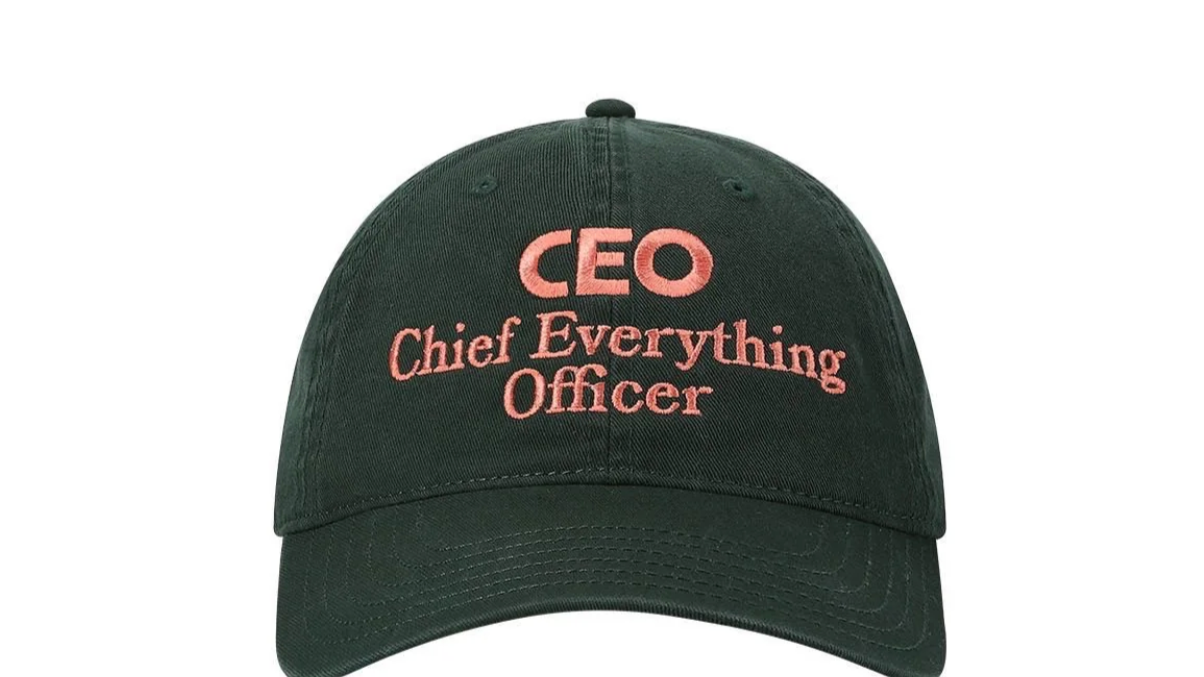
Ask anyone what CEO stands for and you'll get the same three words: Chief Executive Officer. Accurate and almost useless. The title tells you where someone sits on an org chart. It tells you nothing about what the job actually demands of the person sitting in it.
The truth is hiding in the middle letter. That 'E' - Executive - is quietly standing in for a dozen other words. And the five that matter most map directly onto the traits I see again and again in the highest-performing CEOs I work with.
The five 'E's of a high-performing CEO…
Chief Economic Officer. The steward of value - the one who keeps the business commercially honest: where the money comes from, where it goes, and whether the model still holds.
Chief Education Officer. The learner-in-chief and teacher-in-chief. Growing the people around them faster than the market grows the problem.
Chief Environmental Officer. The architect of conditions. The culture, climate and sense of safety and stretch that decide whether good people do their best work or quietly leave.
Chief Ethical Officer. The keeper of trust. Choosing the hard right over the easy wrong, especially when no one is watching.
Chief Enthusiast Officer. The source of energy and belief. Carrying the conviction that makes others want to follow.
And that's only the start. Look closely at any week in the chair and the role stretches further still: Energy, Empowerment, Empathy, Execution, Exploration, Evolution and, just as often, Editing - deciding what the company will say no to. Not one job, but a dozen - economic and ethical, energising and empathetic - all expected of the same person, often in the same afternoon.
Here's the uncomfortable truth: no single human being holds all of these at full strength. Each of us has a handful that come naturally and a handful that drain us. The leaders who burn out are the ones still trying to be every incarnation at once. The leaders who scale get honest about which few are truly theirs and build deliberately around the rest.
You don't have to be all five - your team does.
The moment you accept you can't be all things, the role changes from performing every role to building the team where experts cover them. The hiring logic flips: you stop looking for people like you and start looking for people who complete you. The Education mind beside the Economic mind. The enthusiast beside the steward.
One thing must never be diverse. While skills will differ and backgrounds bring diversity, your values cannot. When your senior people pull in different directions on skill, you get range; when they pull in different directions on values, you get friction, mixed signals and a culture no one chose. Hire for complementary talent, align without compromise on values. That is the line between a high-performing team and a collection of talented individuals.
Because your success as a CEO is not the sum of your own talent - it's the fusion of other people's: their talent, their passion, their value, all held together by shared values. A sum is additive: more people, slightly more output. A fusion is multiplicative: the right people, aligned, producing something none of them could alone. You become less the soloist and more the conductor - and the music is bigger than any one instrument.
You can't complement what you don't understand.
Here's where most leaders skip a step. You cannot assemble the right team around a person you don't yet understand. Building your complement means knowing precisely what is being complemented.
The most successful CEOs don't start with the org chart - they start with the leader. They get ruthlessly clear on three things: Talent - what you are genuinely, naturally brilliant at, the work that feels like leverage rather than labour. Passion - what drives you from the inside, the problems you'd chase even on a hard day. Value - the specific commercial contribution only you bring to the table.
Where those three overlap, I call your GeniusQ - where your output is highest and your energy most renewable. Most leaders underestimate theirs, not because they lack ability but because they lack clarity. And low confidence almost always traces back to low clarity, not low capability. Get clear on your competence and confidence follows. Clarity, competence, confidence - in that order, every time.
Think. Lead. Grow.
The CEO role was never to be all things - it was to know which things are yours, and to build a team whose genius covers the rest. Think - get clear on your talent, passion and value before you act. Lead - build the complement and align it on shared values. Grow - let the fusion compound.
It starts, as it always does, with you. Before you build your team, get clear on your own Talent, Passion and Value. That's exactly what GeniusQ is built to surface - a structured way to find your potential and lead from it.