May 2026 · 4 min read
What Arsenal's 22-Year Wait Teaches Us About Leadership
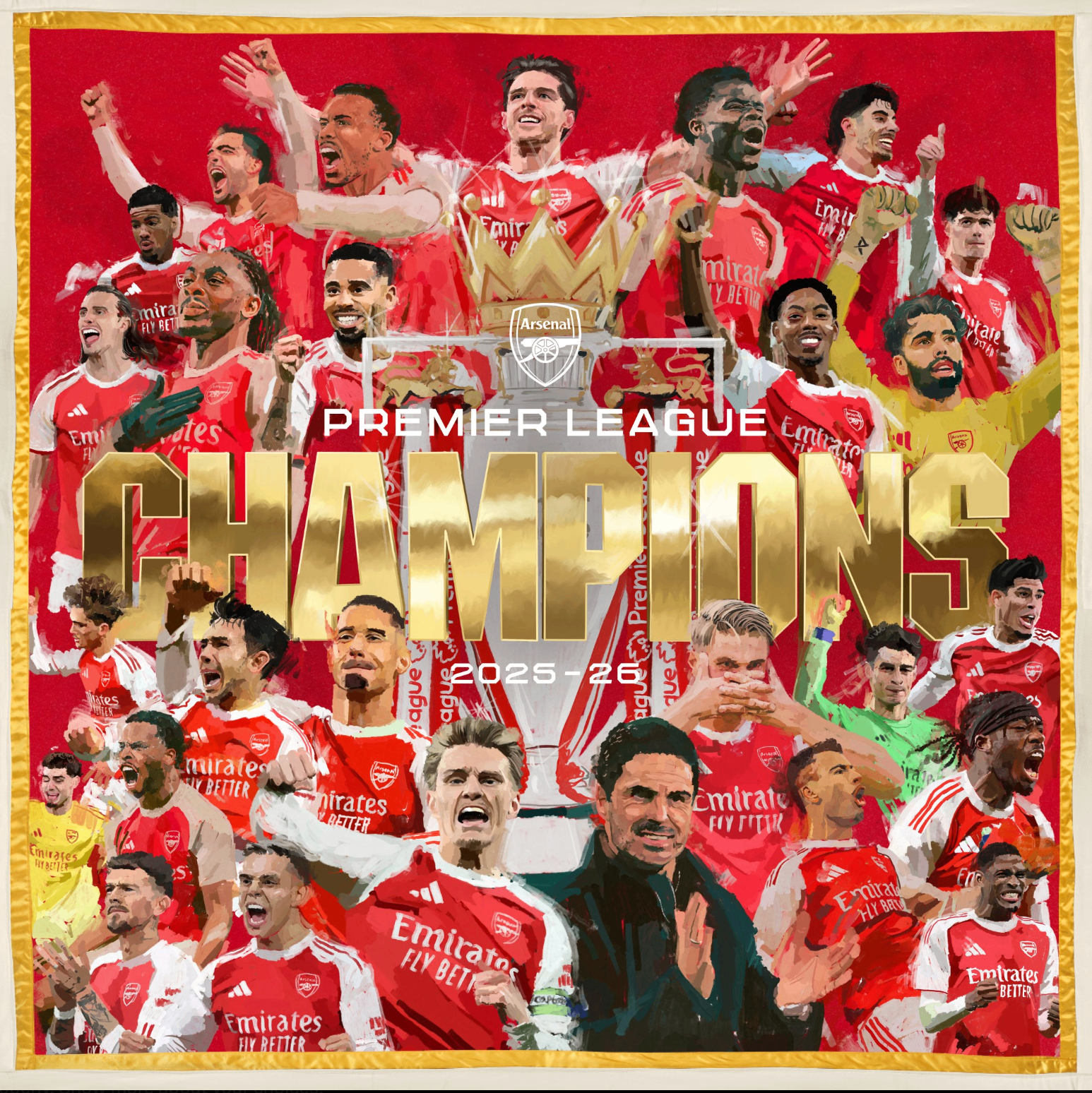
"Love me when I draw and when I lose. To love me when I win is very easy." - Mikel Arteta.
Whether or not you're a Gooner, huge congratulations and credit to Arsenal on becoming Premier League champions after 22 years and three nearly-wins. As an avid supporter it hasn't been easy, plain sailing, or without tension. Inspired by Arsenal lifting the title, I found myself wondering what the deeper learning might be? What separates the winners from the very best, and what did Arsenal finally do differently this time.
Great leadership is built on belief before proof. For the last few seasons Arsenal were close but not there. Three consecutive second-place finishes, the nearest of them by just two points, could easily have created panic, blame, or constant reinvention. Instead, Arteta and his team kept building - kept direction, kept standards and kept their belief.
Every leader wants results, every board wants evidence and every team wants to know the plan is working. But real transformation rarely arrives neatly or quickly. For Arsenal, the last few years weren't failure, they were formation - the painful and public necessary work of becoming a team capable of winning.
That's easy to say once the trophy arrives. It is much harder to believe when you are finishing second, absorbing criticism, managing doubt, and watching others celebrate. This is where leadership is tested - not when the outcome is obvious. The best leaders don't abandon the process just because the outcome hasn't arrived yet.
In business, too many teams change strategy every time results wobble. Arsenal showed the power of staying committed long enough for the work to compound - not blindly, not stubbornly, but with clarity, conviction, and constant learning. They became a great team in the years when the trophy still felt out of reach, not in the final matches of the season. But belief on its own doesn't survive a 22-year wait. Two things kept it alive.
The first is culture. Culture is not what you say, it's what you recognise, repeat and reward. Arsenal's rise wasn't just smart tactics or the finest talent, it was standards in everything: discipline, defensive resilience, relentless intensity, shared accountability. Everyone knew what the shirt and the stakeholders, fans included, demanded.
Culture is often dismissed as soft and unmeasurable - it isn't. It's the behaviour that gets recognised, repeated, and rewarded. You don't build a high-performance culture through slogans; you build it through daily habits, selection decisions, training intensity, feedback, the response to setbacks, holding each other accountable when no one is watching, and the courage to remove what doesn't fit, at the right time.
Look at where it showed up most plainly: Arsenal scored 35 set-piece goals in all competitions this season - more than any club across Europe's top five leagues in any single season over the last decade. That's not luck, that's a standard. Drilled daily until it becomes a weapon. Performance doesn't come from motivation alone; it comes from building an environment where high standards are simply normal. That is when culture becomes a competitive advantage.
The second is psychology - because the final step is rarely technical. At the highest level, most teams are talented, most senior leaders are capable, most businesses have smart people and a strategy. It doesn't always translate into performance. The gap is usually psychological: can you stay calm under pressure? Can you execute when the stakes rise? Can you recover from near misses without becoming defined by them? Can you turn disappointment into deeper belief rather than hidden doubt?
That is what makes Arsenal's achievement so compelling. They had come close before, they had felt the pain of falling short. They had carried the weight of expectation - and this time they crossed the line.
One of the biggest leadership lessons is that the higher you go, the less leadership is about having all the answers and the more it's about creating the conditions where people perform at their best when it matters most. That requires clarity, trust, emotional control, shared belief, and the ability to keep moving when the pressure is as loud as 60,000 Gooners at the Emirates and the media's bellowing prognostications. This is the work behind the work; it isn't always visible. But it's often the difference between nearly and finally.
The real leadership lesson: Arsenal's title is a reminder that success is rarely one big moment. It is usually a thousand smaller ones, repeated with purpose - the conversation after a setback, the standard held in training, the decision not to compromise, the belief protected when others doubt, the patience to keep building when the outcome isn't yet visible.
That is leadership. Not noise, not ego, not constant reinvention. The disciplined pursuit of becoming undeniable. Arsenal are undeniable champions. Congratulations Arsenal.
At UPworking, this is the kind of work I'm increasingly drawn to with leaders and teams: helping them find the clarity, standards, and belief required to move from potential to performance. Because whether you're leading a football club, a business, a team, or yourself, the question is often the same: Are you changing direction because the strategy is wrong, or because the reward hasn't arrived fast enough?